Local SEO Guide: Proven Strategies to Rank Your Small Business
title: 'Local SEO Guide: Proven Strategies to Rank Your Small Business' date: '2025-12-04T09:30:00-07:00' description: 'Dominate your local market with these actionable SEO tips. Learn how to optimize your Google Business Profile, gather reviews, and drive real foot traffic in 2025.' tags: [ 'local seo', 'small business marketing', 'google business profile', 'seo tips', 'digital marketing', 'local search', 'google maps ranking', 'small business seo', 'online visibility', 'search engine optimization', 'local ranking factors', 'marketing strategy', 'customer reviews', 'local citations', 'mobile seo', ] image: '/posts/post-10-01.webp' status: 'published'
Let's be honest for a second. You probably offer the best service or product in your town. Your coffee is hotter, your repairs are faster, or your consulting is smarter than the competition down the street. But does Google know that?
If you are not showing up in the "Map Pack" - that block of three business listings at the top of a Google search - you are practically invisible. It feels unfair, but that is the reality of running a small business today. The best product doesn't always win. The best visible product wins.
Local SEO isn't magic. It isn't about tricking a computer system. It is about sending clear signals to search engines that you are who you say you are, located where you say you are, and that your neighbors trust you.
I have spent years fixing broken SEO strategies for local shops, plumbers, lawyers, and cafes. Most of them make the same mistakes. They focus on the wrong things. They try to rank for global terms when they need to own their neighborhood.
This guide is going to walk you through exactly what works right now. No fluff. No complex jargon. Just the steps you need to take to get your phone ringing.

The Foundation: Google Business Profile
If you do only one thing from this article, make it this one. Your Google Business Profile (formerly Google My Business) is your new homepage. Many customers will find you, call you, and get directions to your store without ever visiting your actual website.
Most business owners claim their profile and forget about it. That is a massive wasted opportunity. Google treats this profile like a social media feed. It needs life. It needs activity.
Here is how to make yours stand out.
Fill Out Everything. I mean everything. If there is a field for "attributes," use it. Does your place have Wi-Fi? Is it wheelchair accessible? Do you identify as women-owned? Check every box that applies. These attributes act like filter tags. When someone searches "coffee shop with wifi," you want to be the answer.
The Description Matters. Don't just stuff keywords here. Write a pitch to a human being. Tell your story. Why did you start this business? What makes you different? Mention your city and neighborhood naturally.
Choose the Right Category. This is where many people mess up. You get one primary category. It carries the most weight. If you are a Pizza Restaurant, don't choose "Italian Restaurant" as your primary, even if you serve pasta. Be specific. Use secondary categories for the other things you offer.
Here is a quick breakdown of how a pro manages their profile versus an amateur:
| Task | Amateur Approach | Pro Approach |
|---|---|---|
| Photos | Uploads logo and one outside shot. | Uploads new photos weekly (staff, work in progress). |
| Reviews | Ignores them or gets angry at bad ones. | Responds to every review within 24 hours. |
| Posts | Never uses the "Update" feature. | Posts weekly offers, events, or news. |
| Q&A | Waits for customers to ask questions. | Uploads own FAQs to populate the section. |
The Power of Reviews (And How to Get Them)
Social proof is the currency of the internet. You wouldn't eat at a restaurant with a 2-star rating, and neither will your potential customers. But quantity matters almost as much as quality.
A business with a 4.8 rating and 200 reviews looks more trustworthy than a business with a 5.0 rating and 2 reviews.
The algorithm looks at three things regarding reviews:
- Volume: How many do you have?
- Velocity: How often do you get new ones?
- Variety: Do they contain text or just stars?
You need a system. Relying on hope is not a strategy. You have to ask. The best time to ask is the moment you have delivered value. If you just fixed someone's sink and they are smiling, ask them right then.
"Hey, I'm glad we got that fixed for you. It would really help a small business like mine if you could leave a quick review on Google."
Most people are happy to do it. You just have to make it easy. Send them a direct link via text or email. Do not make them search for you.
Responding is Mandatory. When you reply to a review, you are not just talking to that one person. You are talking to everyone else who is reading your reviews.
If you get a bad review, take a deep breath. Do not fight. Apologize for their experience (even if they are wrong) and offer to take the conversation offline. This shows other customers that you are reasonable and care about service.
Consistent NAP: The Boring Technical Part
NAP stands for Name, Address, and Phone number.
It sounds simple, but it causes huge headaches. Google acts like a detective. It cross-references your business information across the entire web. It looks at Yelp, Facebook, Yellow Pages, the local chamber of commerce, and industry directories.
If your business is listed as "Joe's Pizza" on Google, but "Joe's Pizza & Subs" on Facebook, and "Joes Pizza LLC" on the Yellow Pages, Google gets confused. Confusion leads to lower rankings.
You need to pick one format and stick to it everywhere.
- Street Formatting: Decide if you are using "St." or "Street". It seems minor, but consistency helps.
- Phone Number: Use a local area code if possible. It signals to the user (and Google) that you are actually local, not a national call center.
- Business Name: Don't add keywords to your name on directories if that isn't your legal name. If your sign says "Smith Plumbing," don't list yourself as "Smith Plumbing - Best Cheap Plumber." That can get you banned.
Run an audit on your citations. There are tools for this, or you can just search your phone number in Google and see what comes up. Fix the inconsistencies. It is tedious work, but it builds a solid foundation for your rankings.
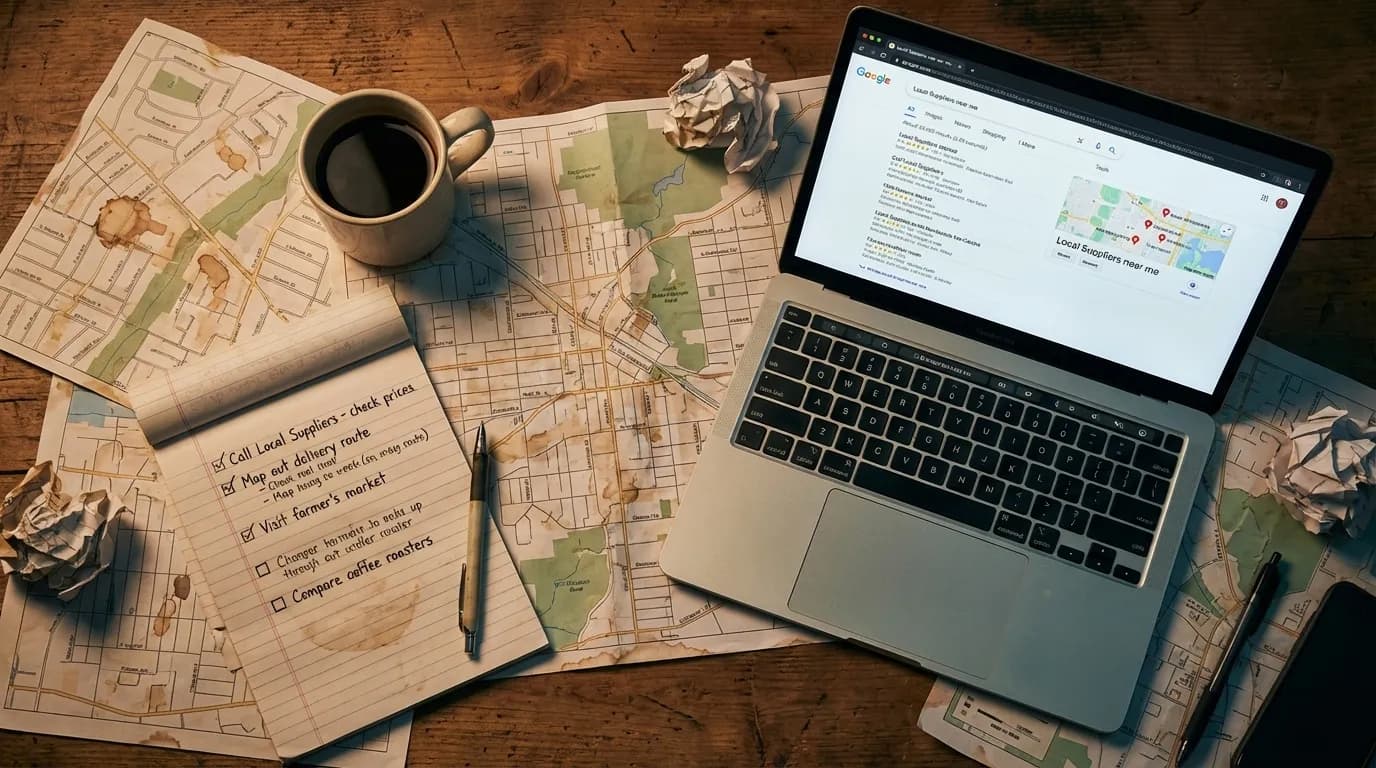
Local Keywords: Speak Their Language
People search differently on their phones than they do on computers. They search for immediate solutions. They don't search for "best way to unclog a drain." They search for "plumber near me" or "emergency plumber [city name]."
You need to understand the intent behind the search.
There are two main types of local intent keywords you should focus on:
- "Service in City" Keywords: These are standard. "Lawyer in Chicago" or "Dentist in Seattle."
- "Near Me" Keywords: You can't optimize for "near me" by writing those words on your site. You optimize for this by actually being near the user and having a verified location in your Google Business Profile.
Don't Ignore the Long Tail. The real gold is often in specific questions. "How much does a haircut cost in downtown Austin?" or "Dog friendly patios in Denver."
Create content that answers these specific questions. Instead of just having a "Services" page, consider having pages for specific locations if you serve a wide area.
However, be careful. Do not create 50 pages that are identical except for the city name. That is called "doorway pages" and Google hates it. Each page needs unique, valuable content relevant to that specific area. Talk about local landmarks. Mention local parking regulations. Prove you actually know the area.
On-Page Optimization for Local Sites
Your website still matters. It is the anchor for all your other efforts. When Google crawls your site, it needs to understand where you are.
Embed a Google Map. Put a map on your contact page and your footer. It helps users find you, and it connects your website data to your map listing.
Local Schema Markup. This is a bit technical, but it is worth it. Schema is a specific code you put on your website that tells search engines what your data means. It tells Google, "This string of numbers is a phone number" and "This text is our opening hours."
You don't need to be a coder to do this. There are plenty of free generators online where you can plug in your info and get the code to paste into your site header.
Mobile Optimization is Non-Negotiable. Most local searches happen on mobile devices. If your site takes 5 seconds to load on a phone, the user is gone. They hit the back button and go to your competitor.
Check your buttons. Are they big enough to tap with a thumb? Is your phone number clickable? Can they find your address without zooming in?
Building Local Authority with Links
Backlinks are still one of the biggest ranking factors. But for local SEO, you don't need links from the New York Times. You need links from your community.
Relevance beats authority here. A link from a popular local food blog is worth way more to a local restaurant than a link from a generic business directory in another country.
How to get local links:
- Sponsorships: Sponsor a Little League team or a local 5k run. They usually link to their sponsors on their website. It is good karma and good SEO.
- Local Press: Did you open a new location? Are you running a charity drive? Send a press release to local newspapers and news stations. They are always looking for local stories.
- Partnerships: Do you work with other local businesses? If you are a wedding photographer, trade links with local florists and venues. Create a "Preferred Vendors" page.
Think about your real-world relationships and how to turn them into digital connections.
The "Secret" Weapon: Local Content
Most small business blogs are ghost towns. They post generic articles like "5 Benefits of Clean Carpets." That content is fine, but it competes with every carpet cleaner in the world.
Write about your city.
If you are a real estate agent, don't just write about "How to Buy a Home." Write about "The Best Schools in [Neighborhood Name]" or "Property Tax Changes in [City] for 2025."
This establishes you as a local expert. It signals to Google that you are deeply tied to this specific geographic area.
Here are some content ideas that work well:
- Guides to local events or festivals.
- Reviews of other non-competing local businesses.
- Case studies of work you did in specific neighborhoods (mentioning the neighborhood name).
- History of your building or area.
Tracking Your Success
You can't improve what you don't measure. You need to know if all this work is actually bringing in customers.
Google Business Profile has its own "Insights" tab. It is fantastic. It tells you:
- How many people called you directly from the listing.
- How many asked for directions.
- How many visited your website.
Pay attention to the "Directions" metric. That is a very strong signal of purchase intent. If someone is driving to your store, they are likely going to buy something.
Also, track where your website traffic is coming from. Set up Google Analytics. Look at the organic traffic channel. Is it growing? Are people staying on the page or leaving immediately?
Rank Tracking. It is helpful to know where you rank, but remember that rankings change based on where the searcher is standing. You might rank #1 for someone standing two blocks away, but #5 for someone three miles away.
Use tools that offer "grid tracking" or "local rank tracking" to see how your visibility spreads across the map.
Conclusion
Local SEO is a marathon, not a sprint. You won't jump to the top spot overnight. But if you are consistent, the results are powerful.
Start with your Google Business Profile. Fix your NAP. Get serious about reviews. Create content that speaks to your neighbors.
The goal isn't just to rank. The goal is to build a brand that your community trusts. When you do that, the rankings naturally follow.
Don't let the technical side overwhelm you. Take it one step at a time. Pick one thing from this guide and do it today. Maybe it is replying to those old reviews. Maybe it is fixing your hours on Facebook. Just start.
Your customers are searching for you right now. Make sure they can find you.